




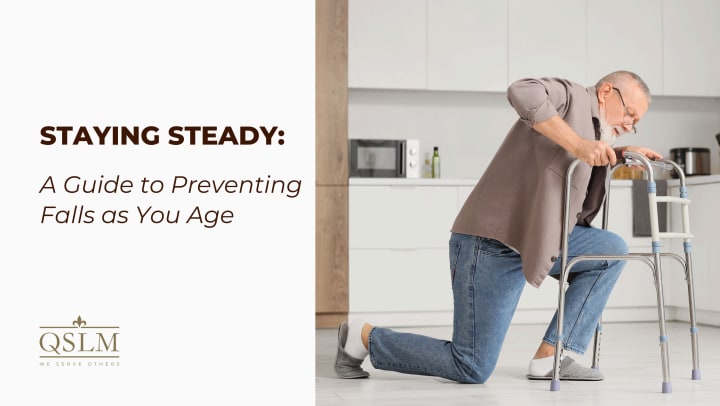
Staying steady on our feet is something most of us take for granted, until age makes it harder. For seniors, a single fall can change everything, which is why prevention matters so much.
Every year, 1 in 4 adults age 65 and older experiences a fall. The risk grows with age as muscle and bone density decline, reaction times slow, and chronic conditions or medications begin to affect balance. When seniors do fall, the consequences can be serious: broken bones, head injuries, costly hospital stays, and long-term loss of independence. The good news is that many falls are preventable. Here's how to reduce the risk.
Stay Active
Regular exercise is one of the most effective ways to improve balance, strength, and overall fitness. A well-rounded routine that's gentle on the joints, and includes cardio, stretching, and strength training, works best. Yoga, tai chi, Pilates, and water aerobics are all excellent options.
Strength training, in particular, is essential. It counteracts age-related muscle loss (sarcopenia), improves bone density and coordination, and has been linked to better mood, sleep, and cognition in older adults. And it doesn't require a gym — body weight, resistance bands, light dumbbells, or even everyday objects like a loaded backpack or a couple of heavy books can do the job. The key is to move slowly, stay controlled, and ask for help when needed.
Manage Your Health
Staying on top of overall health makes a meaningful difference in stability. A few essentials:
* Schedule annual vision and hearing exams
* Wear properly fitted footwear and orthotics
* Keep mobility devices well-maintained
* Stay hydrated and well-nourished
* Manage conditions like diabetes and hypertension per your doctor's guidance
* Seek physical therapy or appropriate aids for injuries
If a fall has already occurred, talk with a healthcare provider about what may have caused it and how to prevent the next one.
Review Medications
Some medications, such as, prescription, over-the-counter, and even supplements or herbal remedies, can cause dizziness, drowsiness, or balance issues. Review everything you're taking with a pharmacist or doctor to check for interactions and side effects, and ask whether any dosages or alternatives should be considered.
Make Your Home Safer
The home is where most falls happen, but small changes can make a big difference.
Floors and walkways
* Remove clutter, loose cords, and throw rugs
* Keep walking paths clear in every room
Lighting
* Add night lights, bedside lamps, and lights at the top and bottom of stairs
* Make sure hallways and entryways are well-lit
Stairs
* Install handrails on both sides
* Secure or remove loose carpeting
* Repair damaged steps or rails right away
Kitchen and storage
* Keep frequently used items within easy reach
* Use a step stool with a handrail, never a chair or counter, to reach high places
Bathrooms
* Place non-slip mats or strips in the tub and shower
* Install grab bars near the toilet and shower
High-slip areas
Keep bathrooms, laundry rooms, entryways, and cooking spaces clean and dry. Wipe up spills immediately.
Know when to ask for help
Changing ceiling lights, hanging curtains, cleaning gutters, or moving furniture are common causes of falls. When in doubt, ask a family member, neighbor, or handyman.
Consider a Senior Living Community
For some seniors, the combination of fall risk, isolation, or memory concerns makes a senior living community a meaningful next step. Most communities, including QSLM communities, offer fitness programs designed for seniors, thoughtfully designed spaces with safety in mind, and team members to help with housekeeping and maintenance. Assisted living and memory care communities also provide personal support with grooming and mobility, along with emergency call systems and trained team members ready to respond if a fall does occur.
The risk of falling does grow with age, but it doesn't have to limit your life. Small, consistent changes, staying active, managing health, making the home safer, and knowing when to ask for help, can go a long way toward keeping you or your loved one steady, confident, and independent.
Want to learn more about safe, vibrant living at QSLM? Find a community near you and come for a visit.
